- Meta released Muse Spark Open on October 15, 2026, an open-weight model that runs locally on Apple Mac Studio hardware.
- Running it needs around 1TB of RAM, so it is a pro-grade setup, but local inference keeps data on the device for better privacy.
- The release is a Meta-Apple interoperability moment and a signal of growing momentum for on-device AI.
- Meta — developer of the Muse Spark Open model
- Apple — maker of the Mac Studio hardware that runs it
- MacRumors — detailed the hardware requirements
Meta has released a striking new model. Meta Muse Spark Open is an open-weight AI model. The big twist is where it runs. It can run locally on a Mac. Meta designed it for Apple Mac Studio hardware. The launch landed on October 15, 2026. Open-weight means the weights are public. So developers can download and run it. That marks a notable Meta-Apple moment. It also pushes on-device AI forward. For privacy-minded teams, this matters a lot. Meta Muse Spark Open blends openness with local power.
Running a large model on a Mac is rare. Most big models live in the cloud. This release flips that idea. Yet it comes with a steep hardware ask. Still, the direction is clear and bold.
Release Snapshot
- Meta Muse Spark Open is an open-weight model from Meta.
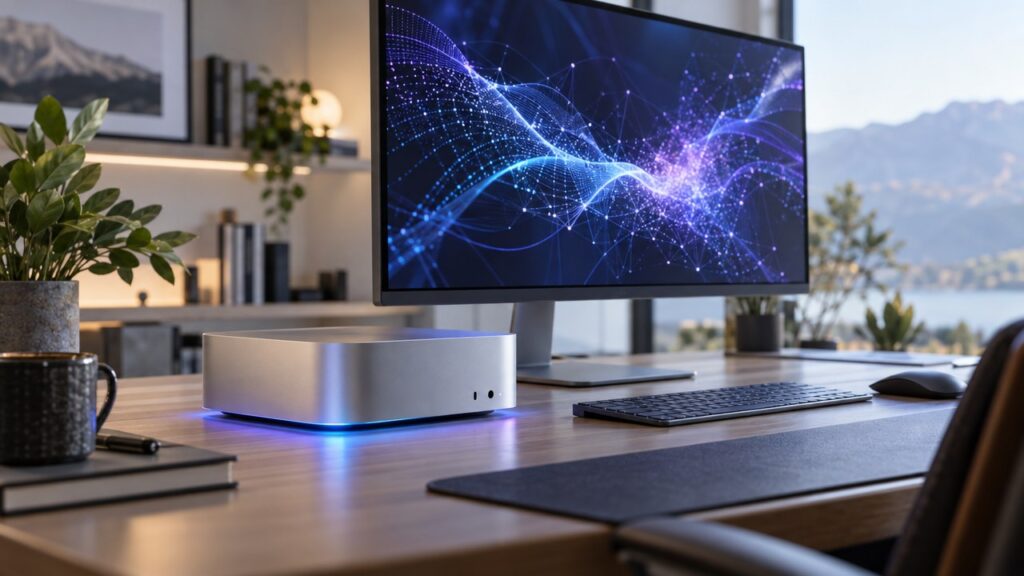
- It runs locally on Apple Mac Studio hardware.
- It needs around 1TB of RAM to run.
- The release landed on October 15, 2026.
- It marks a Meta-Apple interoperability moment.
What Meta Muse Spark Open is
Meta Muse Spark Open is a large language model. It belongs to Meta’s Muse family. The model is open-weight by design. So its trained weights are public. Developers can download them freely. They can run the model on their own hardware. They can also fine-tune it for tasks. This differs from closed, API-only models. TechCrunch reported the open-weight launch. The model aims for strong local performance. In short, it brings big AI closer to the desktop.
Running Meta Muse Spark Open locally
The headline feature is local operation. That is both exciting and demanding. Local use brings privacy and control. Yet it needs serious hardware. The two points below explain the trade-offs.
The ~1TB RAM requirement
The model is very large. Running it locally needs huge memory. Reports point to around 1TB of RAM. That is far beyond normal laptops. A high-end Mac Studio can handle it. MacRumors detailed the hardware needs. So this is a pro-grade setup. Most users will not meet that bar. Still, the capability is real.
Why local inference matters
Local inference keeps data on the device. No prompts leave your machine. That improves privacy by default. It also removes cloud latency. Costs can be more predictable too. Engadget explored the local-AI angle. So sensitive work stays in-house. For some teams, that is decisive.
The Meta-Apple interoperability angle
A Meta model on Apple hardware is notable. The two firms rarely align this way. Yet the pairing makes sense here. Apple’s Mac Studio offers strong local compute. Meta’s open model needs that power. So the fit is natural. Apple’s Mac lineup targets AI costs directly. In other words, hardware and model meet. That could expand on-device AI options.
The push toward local, on-device AI
On-device AI has gained momentum. Privacy rules keep tightening worldwide. Firms want more control of data. So local models look appealing. Open weights make this possible. Hardware demand for AI keeps surging. Ultimately, the trend favors flexibility. Meta Muse Spark Open fits that shift. It gives teams a local option.
How it compares to cloud AI
Cloud AI still leads for scale. It offers easy access and updates. Yet it raises cost and privacy questions. Local models answer some of those. They trade convenience for control. They also trade scale for ownership. So the choice depends on needs. Regulated teams may prefer local. High-volume users may prefer cloud. In addition, hybrid setups are common. Updates differ between the two. Cloud models refresh automatically. Local models need manual updates. So teams must plan upkeep. Hardware also sets the ceiling.
What developers can do with it
Developers gain broad freedom here. They can run the model offline. They can also tune it for tasks. Custom apps become easier to build. Privacy stays intact throughout. Teams can test it on private data. They can swap it in and out. In addition, no API fees apply. So experiments cost less over time. Ultimately, open weights invite innovation.
What it means for on-device AI adoption
Local AI changes how firms plan. They must weigh hardware costs. They must also plan for upkeep. Still, the privacy gains are real. Data stays within company walls. Wall Street tracks Meta’s Muse AI closely. Teams sourcing AI hardware and services can compare vendors on a global B2B marketplace. That helps match needs with verified partners. In addition, clear goals guide smart buys. Budgets must cover the hardware. Yet the model itself is free. So total costs can balance out. In addition, control adds real value.
Is local AI on consumer hardware the next frontier?
The release points to a bigger shift. Local AI is becoming more capable. Hardware keeps getting more powerful. So the barrier should fall over time. Right now, the RAM need is steep. Still, the direction looks promising. In short, on-device AI is rising. The next models may run on less.
Frequently Asked Questions (FAQs)
It is a large open-weight model from Meta. Developers can download and run it locally.
Yes, it is built for Apple Mac Studio. It needs about 1TB of RAM to run.
Local runs keep data on the device. That improves privacy and control.
It means the model weights are public. Teams can run and fine-tune the model.
Meta released it on October 15, 2026.
Privacy-focused and regulated teams benefit most. They keep sensitive data in-house.