- Pony.ai revealed an overseas robotaxi deployment pipeline topping 4,000 vehicles, now larger than its domestic fleet target.
- Europe leads the push, anchored by an expanded Uber partnership to run more than 2,000 robotaxis across five cities.
- Q2 revenue rose 68.8% to $36.2 million with robotaxi revenue up nearly 700%; the main growth constraint is regulatory approval, not manufacturing.
- Pony.ai — Chinese robotaxi firm expanding overseas
- Uber — platform partner for the European rollout
- Baidu (Apollo Go), Waymo — rival autonomous-vehicle operators
Pony.ai, China’s robotaxi firm, has revealed an international deployment pipeline of more than 4,000 robotaxis, and contracted deployments across Europe, Southeast Asia, and the Middle East and North Africa (MENA) have already begun, the company said in a statement as it reported on its second quarter 2026 earnings. The Pony.ai robotaxi expansion is a clear pivot; as a company that primarily developed its business in China, it is now making rapid strides internationally rather than it does at home.
Europe Anchors Pony.ai’s Overseas Robotaxi Push
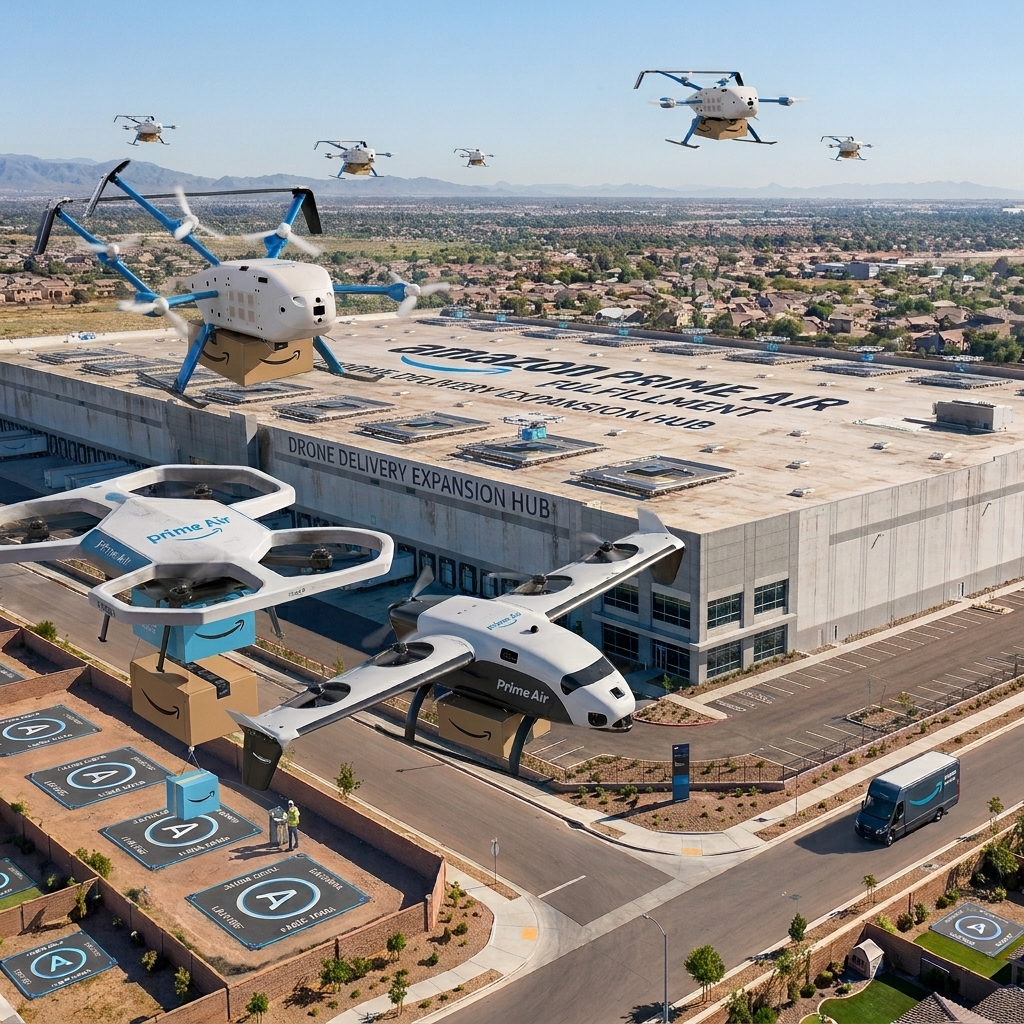
Europe is the biggest contributor. The partnership between Pony.ai and Uber was extended to run over 2,000 robotaxis in five cities across Europe, according to Bloomberg and Uber’s investor relations website. This follows the existing operations of over 200 Pony robotaxis in Luxembourg (with Bolt and Stellantis) and more than 100 robotaxis in Zagreb, Croatia, run by the Verne app integrated with Uber (Europe’s first commercial robotaxi service). Autonomous fleets are scaling on the ground and in the air, as Amazon Prime Air expands to nearly 500 US cities.
Pony.ai’s contracted and live overseas deployments break down as follows:
| Market | Deployment | Partner(s) |
|---|---|---|
| Europe (5 cities) | 2,000+ robotaxis (planned) | Uber |
| Luxembourg | 200+ Pony robotaxis | Bolt, Stellantis |
| Zagreb, Croatia | 100+ robotaxis (Europe’s first commercial robotaxi service) | Verne app, integrated with Uber |
| Singapore | 100+ Pony robotaxis | ComfortDelGro |
A Repeatable Uber Go-to-Market Model
ComfortDelGro has also already deployed more than 100 Pony robotaxis in Singapore. The Pony.ai–Uber collaboration in Europe is significant for B2B mobility and logistics buyers because it provides them with a repeatable go-to-market model: In every market where Pony.ai enters, the company is not developing its own consumer-focused apps from the ground up but rather integrating its Level 4 (L4) autonomous-driving stack into Uber’s existing ride-hailing platforms. Chinese firms are automating Western operations broadly, including how China is quietly automating British shopping.
Overseas Pipeline Now Exceeds the Domestic Fleet Target
Internally, Pony.ai said its China fleet was 1,975 vehicles as of June this year and would maintain the current end-of-year target of 3,500 in over 20 cities. That is, the 4,000-vehicle overseas pipeline is now larger than Pony.ai’s stated goal for its domestic vehicle fleet. A year ago, the company planned to triple its fleet of vehicles globally by the end of 2026.
Q2 2026 Earnings: Robotaxi Revenue Up 691%
This adjustment of strategic priorities is supported by the revenue forecast for Q2 2026. Total revenue increased by 68.8% compared to the same quarter last year to $36.2 million, with revenue from robotaxi services jumping 691.2% to approximately one-third, or $12.1 million, of total revenue. The revenue for the Robotruck increased by about 40% to $13.3 million. Net loss did rise 14.9% year over year to $45.4 million, but the company has $1.39 billion in cash reserves, enabling it to continue deploying overseas without raising capital first. Vehicles are being reinvented, from autonomy to Range Rover’s first fully electric model.
| Q2 2026 metric | Value | Change (YoY) |
|---|---|---|
| Total revenue | $36.2 million | +68.8% |
| Robotaxi services revenue | $12.1 million | +691.2% |
| Robotruck revenue | $13.3 million | ~+40% |
| Net loss | $45.4 million | +14.9% |
| Cash reserves | $1.39 billion | — |
Regulation, Not Manufacturing, Is the Real Bottleneck
CEO James Peng was candid about what is actually gating growth. Rollout timing, he said, depends on “permits and other regulatory and operational requirements rather than manufacturing or demand,” adding that European regulatory approval is “a bit more complex” than in other markets. That distinction matters for enterprise partners evaluating China’s robotaxi global expansion timeline: the bottleneck is not Pony.ai’s ability to build vehicles, but the pace at which individual regulators clear driverless autonomous operation. Autonomous fleets rely on deep component supply chains, sourced from sensors and electronic components suppliers.
Pony.ai vs Rivals in the Global Robotaxi Race
Pony.ai is not alone in this race. Baidu’s Apollo Go has pursued a similar overseas expansion strategy, and Chinese autonomous-vehicle partnerships across the Middle East, North Africa, and Southeast Asia have become a wider industry pattern, not a Pony. Ai-oriented one, S&P Global has separately tracked Chinese robotaxi operators expanding aggressively into Middle Eastern markets. Waymo, by contrast, remains largely US-focused, leaving the international robotaxi race increasingly split along geographic lines between Chinese and American operators. Traditional automakers are under pressure meanwhile, as in Toyota’s global sales decline.
Ride-Hailing’s Move Into Autonomous Mobility
In addition, it’s part of a larger trend where ride-hailing companies are making acquisitions or partnerships in adjacent industries like delivery, as B2BInside reported earlier this week when Uber bought Germany’s Delivery Hero for $14.8 billion, and now autonomous mobility. The move hints at Uber’s intention to act as an aggregator in various future mobility categories, not just one, given its parallel investments in other partners, like Pony.ai and Delivery Hero.
What the 4,000-Vehicle Pipeline Really Means
Pony.ai’s 4,000-vehicle overseas pipeline is not its actual fleet, but rather a regulatory clearance in each market that will dictate the rate at which will become paid rides in the next 12-18 months. However, the revenue mix change that is evident in Q2 indicates that Pony.ai is no longer operating a robotaxi service as a sideline, but is shifting to focus on it as its main growth catalyst. Mobility giants are betting big, as Uber’s $14.8B Delivery Hero deal shows.
Frequently Asked Questions (FAQs)
Pony.ai has revealed an international deployment pipeline of more than 4,000 robotaxis, with contracted deployments already begun across Europe, Southeast Asia, and the MENA region. The overseas pipeline is now larger than the company’s stated 3,500-vehicle year-end target for its domestic Chinese fleet.
Europe is the biggest contributor. Pony.ai’s extended Uber partnership will run over 2,000 robotaxis across five European cities, on top of 200+ Pony robotaxis in Luxembourg (with Bolt and Stellantis) and 100+ in Zagreb, Croatia via the Verne app integrated with Uber, described as Europe’s first commercial robotaxi service.
Total revenue rose 68.8% year over year to $36.2 million. Robotaxi services revenue jumped 691.2% to $12.1 million, about one-third of the total, while Robotruck revenue rose roughly 40% to $13.3 million. Net loss widened 14.9% to $45.4 million, but Pony.ai holds $1.39 billion in cash reserves.
Rather than building its own consumer ride-hailing apps in each market, Pony.ai integrates its Level 4 autonomous-driving stack into Uber’s existing platforms. This gives B2B mobility and logistics buyers a repeatable go-to-market model that Pony.ai can replicate market by market.
CEO James Peng said rollout timing depends on “permits and other regulatory and operational requirements rather than manufacturing or demand,” noting European regulatory approval is “a bit more complex.” The bottleneck is regulatory clearance for driverless operation, not Pony.ai’s ability to build vehicles.
Pony.ai reported a China fleet of 1,975 vehicles as of June 2026 and maintained an end-of-year target of 3,500 robotaxis across more than 20 cities. A year earlier, the company had planned to triple its global fleet by the end of 2026.
Baidu’s Apollo Go has pursued a similar overseas expansion strategy, and Chinese autonomous-vehicle partnerships across MENA and Southeast Asia have become a wider industry pattern tracked by S&P Global. Waymo, by contrast, remains largely US-focused, splitting the international robotaxi race along Chinese-versus-American lines.