By B2BInside Business
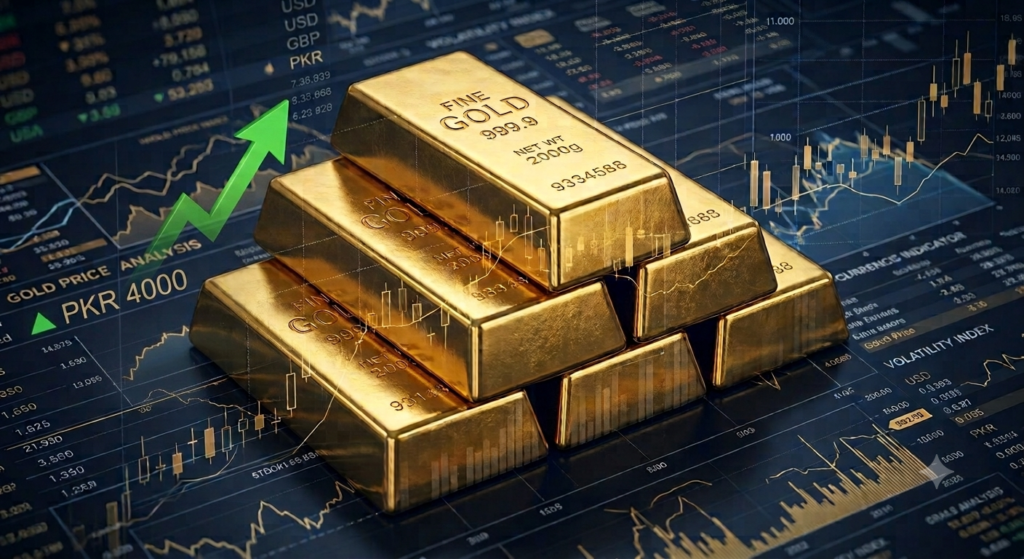
Gold in Pakistan crossed PKR 431,736 per tola on July 27, 2026. That’s a PKR 4,000 single-day gain, roughly 0.93%, and it did not happen in isolation. It tracked a global move: spot gold near $4,101 an ounce, up $7.6, as easing US-Iran tensions pushed oil prices and pulled the dollar lower ahead of this week’s Federal Reserve policy meeting. The spike lands just as Pakistan’s price index re-accelerates.
Retail investors see a headline number. Businesses should see a signal!
Observing the Pattern Matters for Businesses
One day’s move might not seem significant although the trend behind it means more. Pakistan’s 24-karat gold has gained PKR 6,900 per tola on a fiscal-year-to-date basis, even after shedding PKR 25,226 calendar-year-to-date. That’s a 6% swing inside a single reporting window, the kind of volatility that used to take gold a full quarter to produce, now compressed into weeks.
Silver moved in the same direction, up PKR 100 to 6,397 per tola, gaining PKR 48 on the month but still down PKR 1,321 for the year. Precious metals in Pakistan are behaving less like inert stores of value and more like a live readout of currency and geopolitical risk, repriced daily, sometimes hourly, by the All-Pakistan Gems and Jewelers Sarafa Association (APGJSA).
| PKR (24-karat, per tola) | Jul 27, 2026 | Jul 25, 2026 | DoD | 1 Month | FYTD | CYTD |
|---|---|---|---|---|---|---|
| Gold | 431,736 | 427,736 | +4,000 | +500 | +6,900 | -25,226 |
| Silver | 6,397 | 6,297 | +100 | +4 | +48 | -1,321 |
Businesses Impacted by the Price Hike
Jewelers and Gems Retailers
A PKR 4,000 daily swing on a PKR 431,736 base isn’t cosmetic, it’s a working-capital problem. Jewelers who price finished inventory off the previous day’s rate absorb the gap or pass it to the customer instantly. Either choice has a cost: margin compression on one side, order cancellations on the other. Sarafa associations exist precisely because this repricing has to happen every business day, not every quarter like a normal retail markup cycle.
Importers and Forex-sensitive Traders
Gold is Pakistan’s proxy thermometer for rupee confidence. When the metal rallies against a falling dollar globally, and Pakistan’s domestic price rises in step, it tells importers something about landed-cost trajectories before the State Bank’s own interbank data confirms it. This week’s “Top Things to Watch” list, an MPC decision and SBP interventions in the interbank FX market, sit directly upstream of this price move. Businesses that import raw materials priced in dollars are effectively watching gold as a leading indicator of their own input costs.
Banks and Lenders exposed to Bullion-backed Credit
Gold-backed lending is a real line item for Pakistani commercial banks and microfinance institutions. A metal that gained PKR 6,900 this fiscal year but lost PKR 25,226 this calendar year is a volatile collateral asset. Loan-to-value ratios calculated in March look conservative in July and aggressive by December. Treasury desks that don’t re-mark collateral on a rolling basis are underwriting risk they can’t see. It complicates the optimism around Google’s first Pakistan office and its $30B tech ambition.
Gold’s New Power Play
The PKR 431,736 per tola sounds abstract until you convert it. That’s roughly $4,101 an ounce translated into 11.66 grams of local currency, at an exchange rate businesses feel every time they clear a shipment. Put differently: the price of a single tola of gold today would have covered close to three months of Pakistan’s average urban household income a decade ago.
Gold hasn’t just appreciated, it has re-rated its position in household and business balance sheets, from a wedding-season purchase to a genuine inflation hedge competing with property and dollar accounts.
That re-rating has a historical precedent. In the early 1970s, when the Bretton Woods gold-dollar peg broke, businesses that treated gold as decorative jewelry rather than a monetary asset were slowest to adjust pricing and inventory strategy, and slowest to recover margin.
Pakistan’s current bullion market is running a smaller, faster version of the same lesson: gold is no longer just a commodity line in a jeweler’s ledger. It’s a currency-adjacent asset class that touches import costs, collateral value, and consumer discretionary spending simultaneously.
What this actually Changes for Operators?
For businesses operating in or around Pakistan’s precious metals value chain, three actions follow directly from this data:
- Re-mark collateral and inventory more frequently. A monthly gold price check is no longer adequate given DoD swings of nearly 1%. Weekly, or even daily, marking protects margin on both lending and retail sides.
- Treat gold price movement as an FX signal, not just a commodities one. The correlation between global dollar weakness, oil prices, and domestic gold repricing gives import-heavy businesses an early read on landed costs, often days ahead of formal SBP guidance.
- Watch the Fed, not just the Sarafa rate sheet. This week’s Federal Reserve policy meeting sits at the top of the causal chain. Businesses reacting only to the APGJSA’s daily rate are responding to the last domino, not the first.
Gold’s PKR 4,000 jump will read as a footnote in tomorrow’s markets roundup. For Pakistani businesses with exposure to imports, credit, or consumer retail, it’s closer to a leading indicator, one that moved before the policy meeting it’s anticipating even happened.
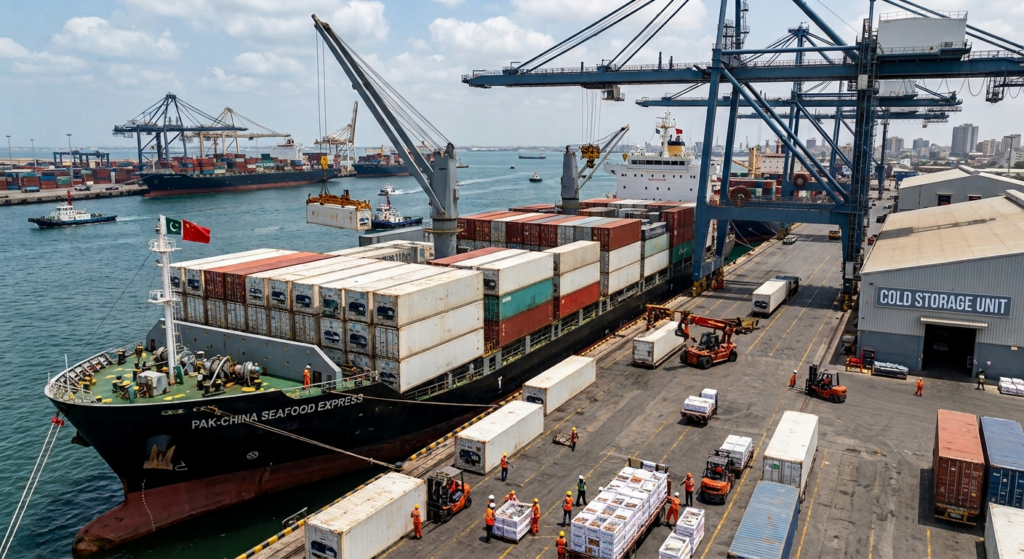
Sources: All-Pakistan Gems and Jewelers Sarafa Association (APGJSA), reported via Mettis Link News, July 27, 2026. Exporters feel it too, even amid bright spots like China’s 41% boom in Pakistani seafood exports.