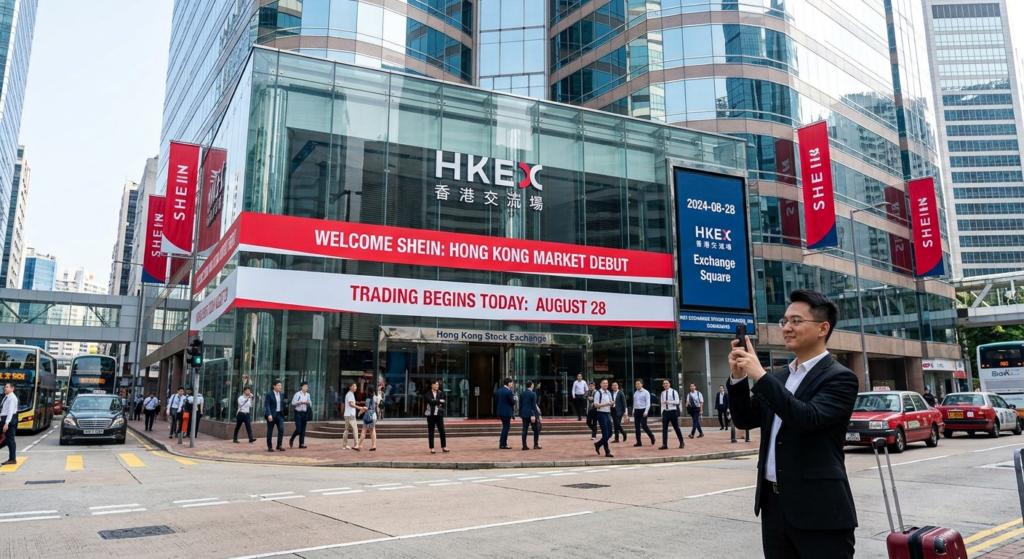
- Shein is targeting a Hong Kong listing on August 28, 2026, after abandoned attempts in New York and London.
- The listing is expected to value Shein at $30–40 billion — roughly a third of the near-$100 billion it was worth at its 2022 peak.
- The reset reflects the removal of the US duty exemption on low-value parcels, rising costs and slowing growth, with a recent $99 million quarterly loss.
- Shein — fast-fashion retailer pursuing the listing
- Hong Kong Stock Exchange (HKEX) — chosen listing venue
HONG KONG — Fast-fashion retailer Shein is preparing to make its stock market debut on the Hong Kong Stock Exchange (HKEX) on 28 August 2026, a source told Reuters, ending a listing saga that took the company through failed attempts in New York and London.
The Shein Hong Kong IPO is expected to value the company at between US$30 billion and US$40 billion, roughly a third of the nearly US$100 billion valuation it commanded in 2022. Shein declined to comment on the timing. The listing reflects China’s retail push West, seen in how China is quietly automating British shopping.
Shein Hong Kong IPO: Key Facts at a Glance
- Shein IPO date: 28 August 2026, according to a source cited by Reuters
- Exchange: Hong Kong Stock Exchange (HKEX)
- Reported valuation target: US$30–40 billion
- 2022 peak valuation: nearly US$100 billion
- Previously pursued: New York and London listings, both abandoned
- Latest quarterly loss: US$99 million
When is Shein’s IPO, and is Shein publicly traded?
Shein is not publicly traded yet. The company is targeting a trading debut on 28 August 2026 in Hong Kong. Until shares begin trading, there is no Shein stock ticker and no Shein share price — a point worth stressing, because the company has been the subject of listing speculation since 2023. Brands tracking fast-fashion supply chains often source through apparel and clothing suppliers.
Shein Hong Kong IPO Valuation: $30–40bn Against Nearly $100bn
The valuation gap is the story. Investors who backed Shein in 2022 valued it at close to US$100 billion. The range now being discussed is US$30–40 billion, and some reports suggest the deal has been pitched below US$30 billion.
Three forces drove the reset: the removal of the US import duty exemption on low-value parcels, rising operating costs, and slowing growth.
Why Hong Kong, not London or New York?
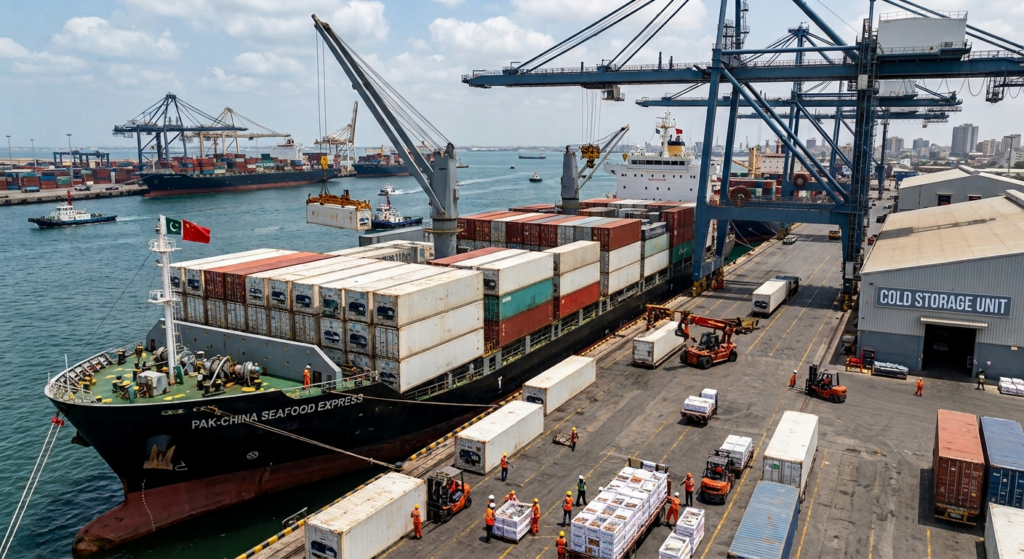
Shein first pursued a New York listing, then pivoted to London when US regulatory and political scrutiny intensified. Neither completed. Hong Kong offers a listing venue closer to Shein’s supply base with fewer of the political obstacles that stalled the earlier attempts. It rides the same cross-border trade engine driving China’s 41% seafood export boom.
Inside the numbers: the quarterly loss explained
Shein posted a US$99 million quarterly loss. A separate US$328 million fair-value charge on convertible redeemable preferred shares, triggered by an accounting change, also weighed on the results.
The de minimis exemption matters here. That rule previously allowed low-value parcels to enter the United States duty-free. The mechanism underpinning Shein’s direct-to-consumer, ship-from-China model. Its removal raised landed costs across Shein’s largest market. Shifting trade rules are reshaping China-to-West shipping broadly, as when China ships 20,000 Midea AC units to France.
Shein vs Zara vs H&M vs Temu
Shein’s advantage has been speed and price. Its vulnerability is that both depend on a cross-border shipping model that regulators in the US and EU are actively reshaping, the same exposure now visible in its accounts. Cross-border commerce is consolidating fast, seen in Uber’s $14.8B Delivery Hero acquisition.
How to buy Shein shares
Shein shares cannot be bought yet. Once trading opens, investors will need a broker offering access to the Hong Kong Stock Exchange, and retail participation will depend on the subscription window, lot size and eligibility rules set out in the final prospectus. Investors should read the prospectus in full. This article is information, not financial advice.
Valuation pressure mirrors other Chinese giants, like Alibaba, whose AI spending is squeezing profits.
Frequently Asked Questions (FAQs)
Shein is targeting a trading debut on the Hong Kong Stock Exchange (HKEX) on 28 August 2026, according to a source cited by Reuters. The listing ends a saga that first took the company through abandoned attempts in New York and London.
The Shein Hong Kong IPO is expected to value the company at US$30–40 billion, with some reports suggesting it has been pitched below US$30 billion. That is roughly a third of the nearly US$100 billion valuation it commanded in 2022.
Not yet. Until shares begin trading there is no Shein stock ticker and no share price. Once trading opens, investors will need a broker offering access to the Hong Kong Stock Exchange, with participation set by the subscription window, lot size and eligibility rules in the final prospectus.
Three forces drove the reset: the removal of the US import duty exemption on low-value parcels, rising operating costs, and slowing growth. Together they cut the target to about a third of Shein’s 2022 peak.
Shein first pursued New York, then pivoted to London when US regulatory and political scrutiny intensified; neither completed. Hong Kong offers a listing venue closer to Shein’s supply base with fewer of the political obstacles that stalled the earlier attempts.
Shein reported a US$99 million quarterly loss, alongside a separate US$328 million fair-value charge on convertible redeemable preferred shares triggered by an accounting change. The removal of the US de minimis exemption also raised landed costs across its largest market.
The de minimis exemption previously let low-value parcels enter the United States duty-free, underpinning Shein’s direct-to-consumer, ship-from-China model. Its removal raised costs across Shein’s biggest market and is one of the pressures behind the discounted Hong Kong IPO valuation.