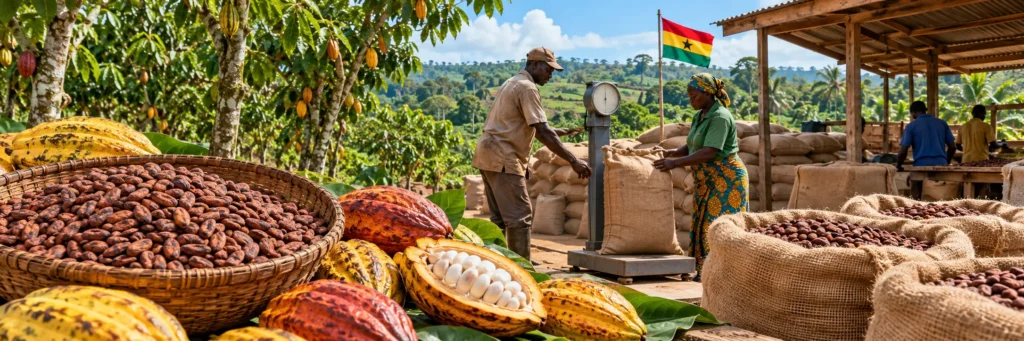
Ghana has opened its new cocoa season with two key changes. It raised the price paid to farmers. It also shifted how it funds the season. The new Ghana cocoa producer price reaches GH₵42,400 per tonne. In other words, farmers gain more, and financing becomes local.
The changes come from the Ghana Cocoa Board, or COCOBOD. They form part of wider sector reforms. Additionally, they aim to protect farmer incomes. The goal is a more sustainable cocoa sector.
What has COCOBOD announced?
The board confirmed the details for the 2026/27 season. The new price marks a modest but real increase. It also guarantees farmers a fixed share of export value. The key figures appear below.
- New producer price: GH₵42,400 per tonne
- Previous price: GH₵41,392 per tonne
- Increase: GH₵1,008 per tonne, about 2.4%
- Realized FOB price: US$2,650 per tonne
- Farmer share: 71.18% of the FOB value
COCOBOD Chief Executive Dr. Randy Abbey announced the changes. He confirmed them around September 25, 2026. The new price forms part of the season opening. Consequently, farmers now know their guaranteed rate. In other words, the season starts with clear terms.
A New Financing Model
The bigger shift may be in the financing. COCOBOD is changing how it funds cocoa purchases. It is moving away from foreign syndicated loans. Instead, it will rely on domestic capital markets. The sections below explain this important change.
From Syndicated Loans to Local Capital
For years, COCOBOD used large international loans. These syndicated loans funded the cocoa buying season. Now the board wants a more local approach. It plans to raise money at home instead.
A proposed Cocoa Notes Programme sits at the centre. It would mobilise domestic investor participation directly. That reduces reliance on foreign lenders. Additionally, it keeps more financial value inside Ghana. In other words, local capital replaces external debt.
Why does this shift matter?
The financing change carries real strategic weight. Foreign loans often came with high costs. Domestic funding can improve COCOBOD’s financial health. It also builds a local investment base. Therefore, the move supports long-term sustainability.
The board also introduced a new pricing mechanism. It links prices to international cocoa markets automatically. Exchange rates and economic factors feed into it. This makes future price changes more predictable. Consequently, farmers and buyers gain more clarity.
What it means for Global Cocoa Buyers?
Ghana is one of the world’s top cocoa producers. Its pricing and financing choices ripple worldwide. Chocolate makers and traders watch these moves closely. Stable farmer incomes support steady future supply.
For B2B buyers, sourcing reliability matters most. Cocoa processors need dependable, traceable supply chains. A digital B2B platform helps firms find trusted partners. Such platforms connect cocoa buyers with verified sellers. That reach supports resilient global sourcing.
This story reflects wider shifts in commodity trade. B2BInside has tracked how export markets keep evolving. Our report on Pakistan’s 41% seafood export boom shows changing demand. Soft commodities face their own price pressures too. Our coverage of the global wheat price rally reflects that trend.
Will the Reforms Succeed?
The intent behind the changes is clear. Ghana wants stronger farmer incomes and local financing. However, success depends on execution and market prices. Global cocoa prices remain volatile and uncertain.
Ultimately, the reforms mark a meaningful step. They shift both pricing and funding toward stability. Yet the modest 2.4% price rise has limits. Farmers still face rising costs at home. For now, Ghana has reset its cocoa strategy.
Frequently Asked Questions (FAQs)
The new price is GH₵42,400 per tonne. It applies to the 2026/27 cocoa season. That is up from GH₵41,392 previously.
The increase is GH₵1,008 per tonne. That works out to about 2.4%. It reflects wider sector reforms.
Farmers receive 71.18% of the FOB value. The Ghana Cocoa Board Act ensures at least 70%. The realized FOB price is US$2,650 per tonne.
COCOBOD is shifting to domestic capital markets. A proposed Cocoa Notes Programme leads the plan. It replaces traditional foreign syndicated loans.
COCOBOD Chief Executive Dr. Randy Abbey announced it. He confirmed the changes around September 25, 2026. They form part of the season opening.