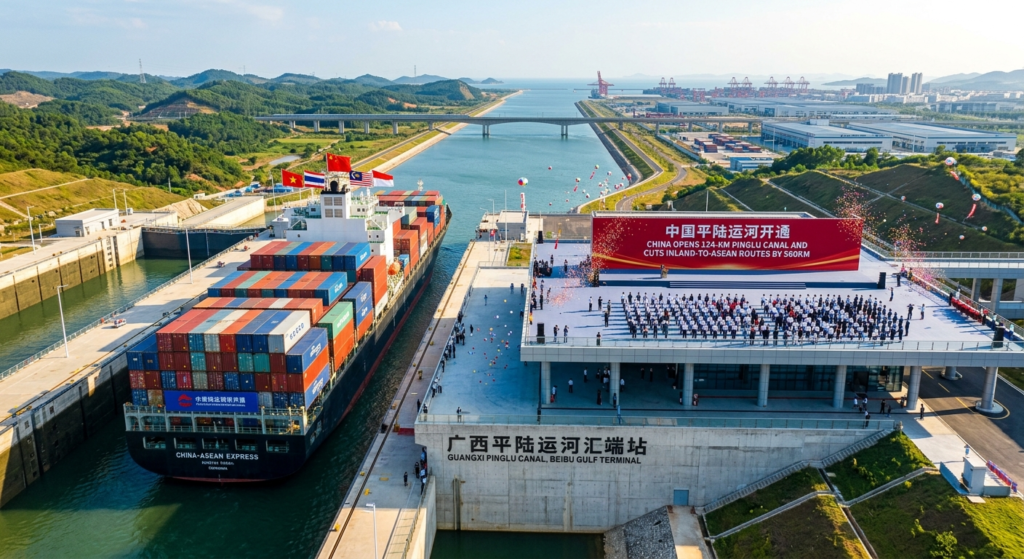
China has opened a major new waterway to Southeast Asia. The Pinglu Canal officially began navigation this month, stretching 134 kilometres through the Guangxi region and connecting the Xijiang River to the Beibu Gulf. In short, it links inland China directly to the sea for the first time.
What is the Pinglu Canal and why does it matter?
The canal opened for navigation on September 16, 2026, creating a fresh river-to-sea shipping passage. It shortens the route from southwest China to ASEAN by around 560 kilometres, so goods can now reach Southeast Asian ports far faster than before.
Cost and Time Savings are Significant for Shippers
Before looking at the exact figures, it’s worth understanding why this matters so much to a shipper’s bottom line: a shorter route means less fuel, less time, and lower risk on every shipment. Here is what the canal changes:
| Metric | Impact |
|---|---|
| Distance cut (southwest China to ASEAN) | ~560 km shorter |
| Logistics cost reduction | 18% to 30% |
| Maximum vessel capacity | Up to 5,000 tonnes |
| Canal length | 134 km |
| Opened | September 16, 2026 |
The waterway can handle sizeable cargo vessels, which means it suits both bulk goods and containerised cargo. Many industries stand to benefit as a result.
Significance of this Canal for the Nation
The project carries deep significance for China. It is the first major river-to-sea canal built in decades, and officials call it the first nationally coordinated canal project since 1949. That framing highlights just how strategic this infrastructure is, and it reflects China’s broader focus on trade infrastructure generally.
The Pinglu Canal also strengthens China’s ties with ASEAN. Southeast Asia has become a vital trading partner and now ranks among China’s largest export markets, so faster shipping deepens that commercial relationship even further. Geography and trade policy, in other words, now line up in China’s favor.
Businesses and Benefits from the Pinglu Canal
For B2B audiences, the canal opens up real, practical opportunities:
- Manufacturers and traders benefit from cheaper, faster shipping routes.
- Exporters in southwest China gain a major logistics advantage.
- Importers in ASEAN receive goods more quickly.
- Logistics providers can design entirely new service routes around the canal.
This infrastructure push mirrors China’s wider export ambitions; the country keeps building new links to global markets. B2BInside recently covered a related story, China Ships 20,000 Midea AC Units to Help France Fight the Heatwave, and both stories show the same theme: strong logistics power is what supports China’s continued export growth.
Businesses trading between China and ASEAN need strong networks to make the most of new routes like this one. Global B2B marketplaces such as Industrytc connect cross-border buyers and suppliers, helping firms act quickly on new trade links as they open.
What does the Canal mean for Southwest China?
The canal also carries broader regional implications. It could shift some cargo away from congested ports, and inland provinces now gain far better access to the sea. It may even spur industrial growth along its path, ultimately reshaping the economy of southwest China.
The scale of the engineering itself is impressive; building a 134-kilometre canal required major investment and years of work. The result gives China a genuine strategic trade artery. Infrastructure, in other words, has become a competitive advantage in its own right.
Whether the canal meets its full potential remains to be seen, and traffic volumes over time will reveal its true impact. That said, the cost and distance savings already look compelling, and ASEAN trade continues to grow strongly. For now, the Pinglu Canal marks a major logistics milestone.
Direct Route for China’s Landlocked Southwest
The canal serves China’s vast southwestern interior, where provinces have long lacked easy access to the sea. Goods there often had to travel far to the east just to reach a port, adding real cost and time to every export. Now the canal offers a direct southern route instead, so geography no longer holds the region back.
This project also supports China’s inland development goals. Beijing wants growth to spread beyond its coastal cities, and better logistics can attract factories to inland areas by improving their competitiveness. New industries may well follow the trade route, which could reshape regional economics over time.
More Connected and Resilient Trade Network
The waterway strengthens China’s position in ASEAN trade generally. The bloc has overtaken others as a key partner, and faster links deepen supply chain integration further. Many firms already build components across the region, and cheaper routes will only encourage more cross-border production, binding the two economies closer together.
For global businesses, the route offers fresh options too. Shorter distances can lower delivery times and costs, so exporters and importers may want to rethink their logistics and route more cargo through southern China.
The canal complements China’s wider infrastructure network as well. It links with rivers, railways, and coastal ports to form one integrated logistics system; goods can move by barge, then by sea vessel, improving efficiency across long journeys. That flexibility reduces reliance on any single route, which strengthens overall supply chain resilience.
Environmental Impact of the Canal
Environmental factors also shaped the project’s design. Water transport emits less carbon than road freight, so shifting cargo to barges can meaningfully cut emissions. That aligns with China’s broader climate commitments, and lower fuel use reduces logistics costs even further. The canal, in short, offers both economic and environmental benefits at once.
The opening drew wide attention across the region. ASEAN businesses welcomed the faster trade link, and analysts highlighted the canal’s long-term strategic value. Some compared it to other landmark waterways around the world. Its significance reaches well beyond China’s own borders, and the project could shape regional trade for decades to come.
Future Prospects for China from the Canal
Some interesting information about the canal:
- The Pinglu Canal cuts shipping distance from southwest China to ASEAN by about 560 km.
- Logistics costs on that route are expected to fall by 18% to 30%.
- The canal is the first nationally coordinated river-to-sea canal since 1949.
- It strengthens China-ASEAN trade ties and opens new options for manufacturers, traders, and logistics providers.
- Platforms like Industrytc help businesses act quickly as new trade routes like this one open up.