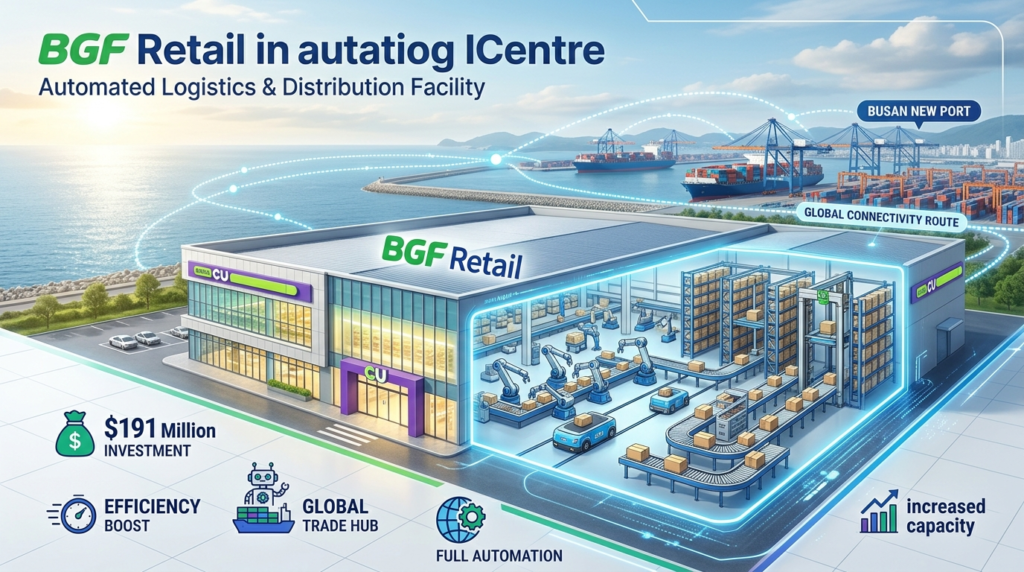
BGF Retail has opened a major new logistics facility in Korea. The automated centre sits near the busy Busan New Port and represents an investment of 260 billion won, about $191 million in total. This new BGF Retail logistics center strengthens the company’s entire supply chain.
What does the New BGF Retail Logistics Center do?
BGF Retail operates the well-known CU convenience store chain, which runs thousands of stores across South Korea. The new centre will support deliveries to those stores across Busan and the wider Yeongnam region. In short, it anchors the company’s entire southern distribution network.
Inside a Large and Highly Automated Facility
Before getting into the automation itself, it helps to picture the scale of the site, since the size is part of what makes the automation possible. Here are the key facts:
| Detail | Figure |
|---|---|
| Total investment | 260 billion won (~$191 million) |
| Site area | 47,187 square metres |
| Total floor area | 128,073 square metres |
| Construction completed | July 2026 |
| Refrigerated section | Already operating |
| Ambient-temperature section | Opens by year-end |
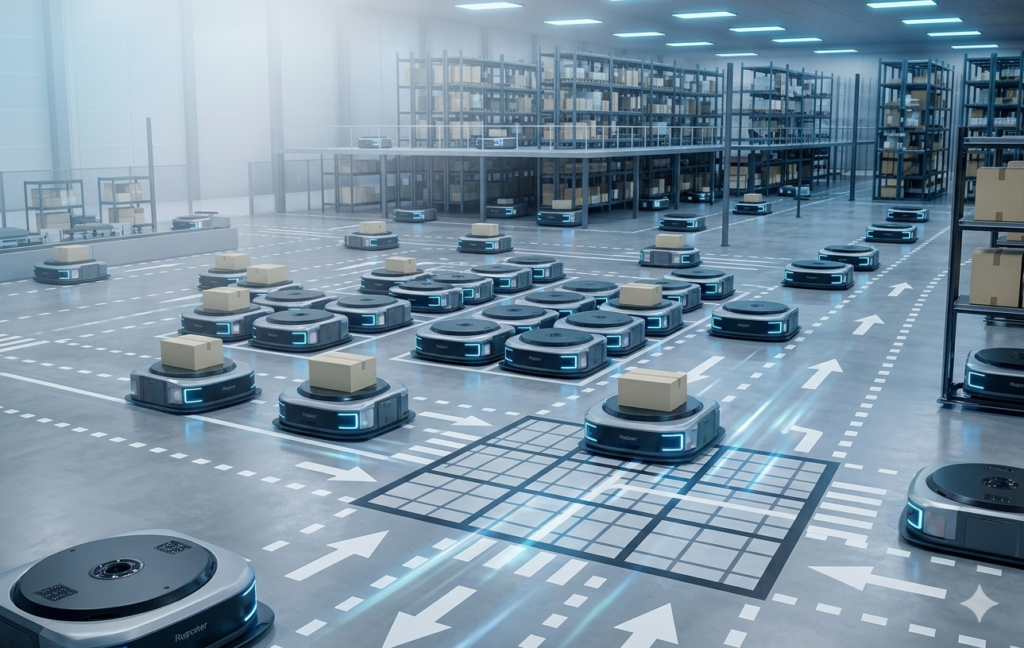
Automation sits at the heart of the design. The centre uses shuttle-based storage and retrieval systems, along with automatic labelling technology and digital picking systems that speed up order preparation. Together, these tools boost sorting efficiency across the entire facility.
Benefits of Automation for Businesses
The automation delivers clear, practical benefits for the business:
- It lets the centre respond flexibly to sudden swings in order volume.
- Busy periods no longer overwhelm the system.
- It reduces physically demanding manual tasks for workers.
- Working conditions improve for staff as a result.
The centre also earned preliminary Grade 1 smart certification from South Korea’s Ministry of Land, Infrastructure and Transport. That rating recognises advanced automation and efficiency, placing the facility among Korea’s most modern logistics centres and setting a real benchmark for retail logistics generally.
Why Location matters for this Logistics Center?
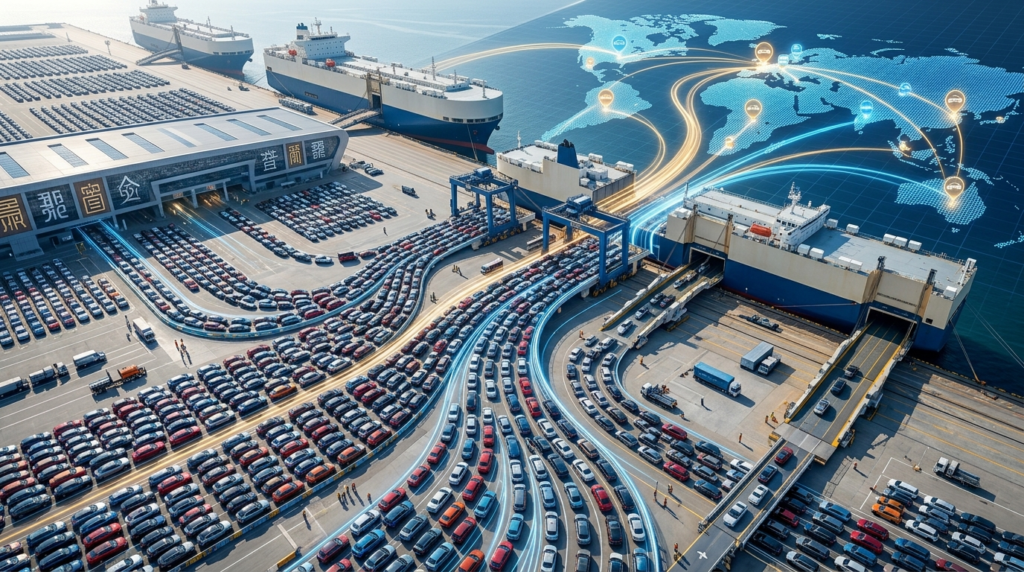
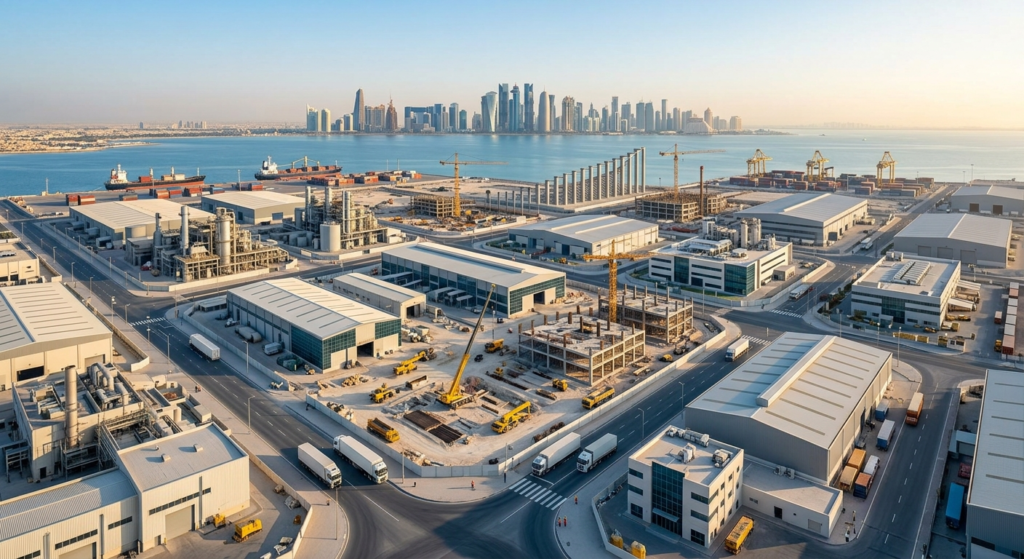
Location gives the centre a strategic edge. It sits close to the major Busan New Port, which supports both import and export operations directly. The centre can handle trade with several countries, including Mongolia, Malaysia, Kazakhstan, and Hawaii, linking local retail all the way to global trade.
Sustainability is also featured in the design. Solar panels generate clean power on site, producing up to 2,700 megawatt-hours each year, which cuts the facility’s energy footprint. The project supports local jobs and economic growth too, so the centre blends efficiency with genuine responsibility.
Company leaders highlighted this strategic value at the opening. BGF Group Chairman Hong Seok-jo attended, along with Vice Chairman Hong Jung-guk and Busan Mayor Jeon Jae-soo. Leaders said the centre strengthens CU’s logistics capabilities and ensures a stable supply of products going forward.
What this means for B2B Logistics and Retail?
For B2B audiences, this project reflects a clear industry trend: retailers are investing heavily in supply chain automation. Automated centres like this one cut costs, improve reliability, and help retailers manage demand swings more effectively. B2BInside recently covered a related trend in Amazon Prime Air Is Expanding to Nearly 500 US Cities This Year; both stories show logistics automation reshaping how retail delivery works.
Retailers and suppliers depend on efficient distribution networks to keep shelves stocked and customers happy. Global B2B marketplaces such as Industrytc connect retail buyers and suppliers, helping firms manage sourcing at scale as they build out modern, automated supply chains.
BGF’s plans to grow the Hub further
BGF plans to grow the centre further over time, with ambitions to develop it into a genuine global hub. Its port location makes that goal realistic, and its automation gives it plenty of room to scale. Ultimately, the centre positions CU for long-term growth well beyond its current footprint.
The investment signals real confidence in Korea’s retail sector. Convenience stores remain hugely popular across the country, and efficient logistics support their famously tight delivery schedules. Automation, in other words, underpins the entire convenience-store model. For now, BGF Retail has clearly strengthened its competitive position.
Whether the hub ambition fully succeeds depends on execution. Global trade links need to develop alongside domestic delivery, but the location, technology, and smart certification all look promising. For now, the centre marks a major logistics upgrade for the company.
Why Retailers are racing toward Automation?
This investment reflects rising pressure across retail logistics generally:
- Convenience stores need frequent, reliable restocking.
- Customers expect fresh products available at all times.
- Automation helps meet those demands efficiently and consistently.
- Retailers are investing to protect service levels as expectations rise.
Labour trends are pushing retailers toward automation too. Warehouse work can be physically demanding and repetitive, and Korea faces an ageing workforce along with real labour shortages. Automated systems ease the reliance on manual labour while improving safety and reducing injuries; technology, in short, addresses both cost and staffing challenges at once.
The centre’s export role adds one more dimension. Its port location connects retail directly to global trade, letting BGF source products from many countries while also supporting broader import and export flows. That dual role, serving both local stores and global commerce, adds real value to the investment.
Key Takeaways
For the wider industry, this project sets a real standard. Other retailers will study its automation closely, since smart logistics increasingly define competitive retail; firms that lag on technology risk falling behind.
Some interesting findings are as follows:
- The new BGF Retail logistics center cost $191 million and earned preliminary Grade 1 smart certification.
- Shuttle-based storage, automatic labelling, and digital picking systems drive its efficiency.
- Its location near Busan New Port supports trade with Mongolia, Malaysia, Kazakhstan, and Hawaii.
- Solar panels supply up to 2,700 megawatt-hours of clean power each year.
- Automation is becoming a necessity for competitive retail logistics, not a luxury.