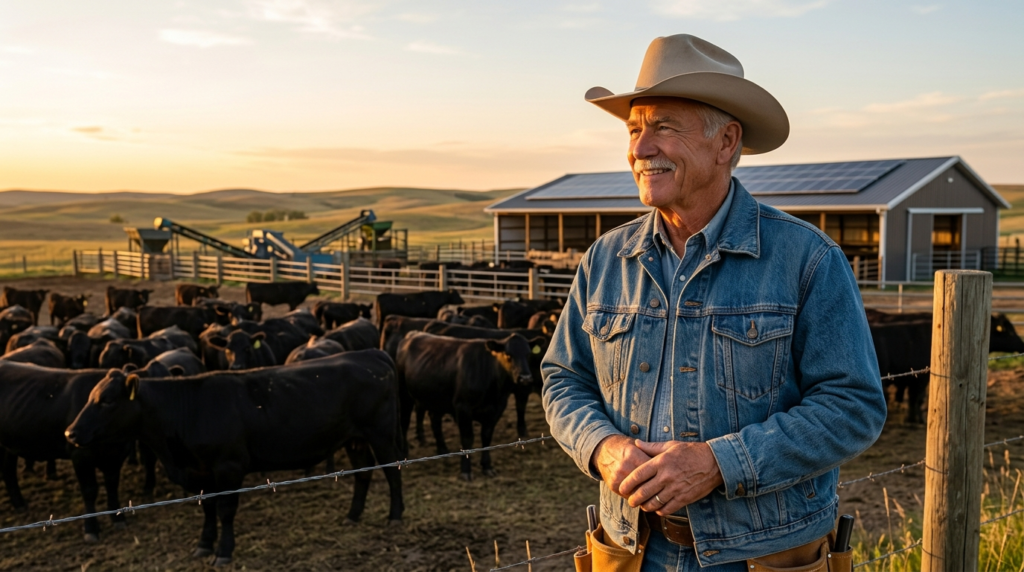
US ranchers are enjoying some of their best returns in years. Feeder cattle prices have surged toward record territory, lifting both futures and cash markets. The rally reflects a simple fact: cattle are scarce across the country. In short, scarcity is rewarding cattle producers handsomely.
Why Feeder Cattle Prices are Climbing so Fast?
The futures market showed the strength clearly this month. Prices jumped in a single trading session and kept climbing from there. The cash market told the same story, and so did smaller regional auctions.
Broad Gains across all Segments of the Cattle Market
Here is a quick look at how each part of the cattle complex moved:
| Market | Contract / Region | Latest Move |
|---|---|---|
| Feeder cattle futures | October | Up $5.35, settled at $337.85 (CME) |
| Feeder cattle futures | November | Up $4.60, settled near $332.77 |
| Feeder cattle index | CME | Approaching $340 |
| Live cattle futures | October | Up $2.57, to $222.25 |
| Live cattle futures | December | Up $2.92, to $225.15 |
| Cash cattle | Northern dressed | ~$350, up $5–$6 on the week |
| Cash cattle | Southern live | ~$226/cwt, up $3–$4 on the week |
Technical buying and firm beef prices supported the rally, and midday boxed beef gains added even more momentum. Cash and futures markets moved in step with each other.
Regional Auctions show even Sharper gains for Lighter Cattle
Before looking at the numbers, it helps to know why lighter cattle are getting special attention: buyers want young animals to place on pasture and feed out over the coming months. That demand shows up clearly in auction-barn data.
At Joplin Regional Stockyards, the gains were sharpest for lighter feeder steers:
- Steers under 600 pounds gained $20 to $30 per hundredweight.
- Heavier steers held steady at $5 higher.
- Medium and large steers around 650 pounds averaged $392.69.
- Smaller cattle, in other words, commanded especially strong premiums.
What’s behind the tight Cattle Supply?
The core driver is simple: there are not enough cattle. The US herd has shrunk after years of drought, so fewer cattle are reaching the market. Estimated cattle slaughter recently hit 106,000 head, about 3,000 head lower than a year earlier. Due to this, buyers are competing hard for the animals that are available.
Strong beef demand adds even more price pressure. People have kept buying beef even though it costs more. Firm boxed beef values support the prices packers are willing to pay for cattle.
Demand and scarcity are feeding off each other, and that combination has pushed prices to rare highs.
What Rising Feeder Cattle Prices Mean for B2B Buyers
For B2B audiences, this rally touches the whole food chain, not just ranchers. Consider who feels it:
- Meat processors pay more to secure cattle for slaughter.
- Restaurants and retailers eventually pass those costs on to shoppers.
- Feed suppliers and equipment makers track the trend closely.
- Ranchers are encouraged to invest in rebuilding their herds.
The cattle surge also fits a wider pattern of rising commodity prices. Many food and raw material costs have climbed lately. B2BInside recently covered how Pakistan’s price index just re-accelerated, and both stories point to the same trend: inflation pressure is building across food markets worldwide.
That pressure makes reliable trading partners more valuable than ever. Buyers and sellers of agricultural commodities need to source with confidence even as prices swing. Global B2B marketplaces such as Industrytc connect commodity buyers and suppliers across markets, which helps firms make better decisions during volatile periods.
Lean Hogs are moving the Opposite Way
Not every part of the meat market is rallying. The lean hog market moved in the other direction entirely:
| Market | Move |
|---|---|
| October lean hog futures | Down $1.92, to $79.60 |
| December lean hog futures | Down $1.45, to $71.25 |
| Estimated hog slaughter | Rose to 492,000 head |
Technical selling and uneven cash trade pressured hogs lower. The contrast shows how supply shapes each market on its own terms: cattle remain scarce, so cattle prices keep climbing, while hogs are more plentiful, so hog prices soften. Different demand trends affect each type of meat too. Ranchers, as a result, are holding a rare, strong position right now.
Will the Feeder Cattle Rally Last?
The rally reflects real, lasting supply tightness. Years of herd reduction have limited how many animals are available, and rebuilding a herd takes real time; cows must be bred and calves raised slowly, often over several years. That means the shortage will not ease quickly.
Whether the rally continues depends mostly on what ranchers decide to do next:
- Producers may hold back heifers to rebuild their herds, which would keep supply tight and prices firm.
- Beef demand must stay resilient even as prices climb.
- Feed and land costs will keep shaping each rancher’s decision to sell now or wait.
Selling now captures strong profits immediately. Holding heifers back instead rebuilds the herd for the future, but it means giving up today’s high prices. Every rancher has to weigh that short-term versus long-term trade-off for themselves.
The effects ripple through the whole beef supply chain. Processors pay more to secure cattle, and those costs pass along to wholesalers, retailers, and eventually restaurant menus. Some consumers may even shift toward cheaper proteins as a result. For B2B buyers, planning around this volatility is essential; forward contracts, hedging, and reliable sourcing partners all help control the risk.
Final Verdict
For now, feeder cattle prices are delivering record gains, and the coming months will test how long that lasts. The most important points to remember:
- Feeder cattle futures and the CME index are near record highs, driven by tight US herd supply.
- Regional auctions show the steepest premiums on lighter, younger cattle.
- Rising cattle prices are pushing costs through the entire food chain, from processors to restaurants.
- Lean hogs are moving in the opposite direction, showing how differently each protein market can behave.