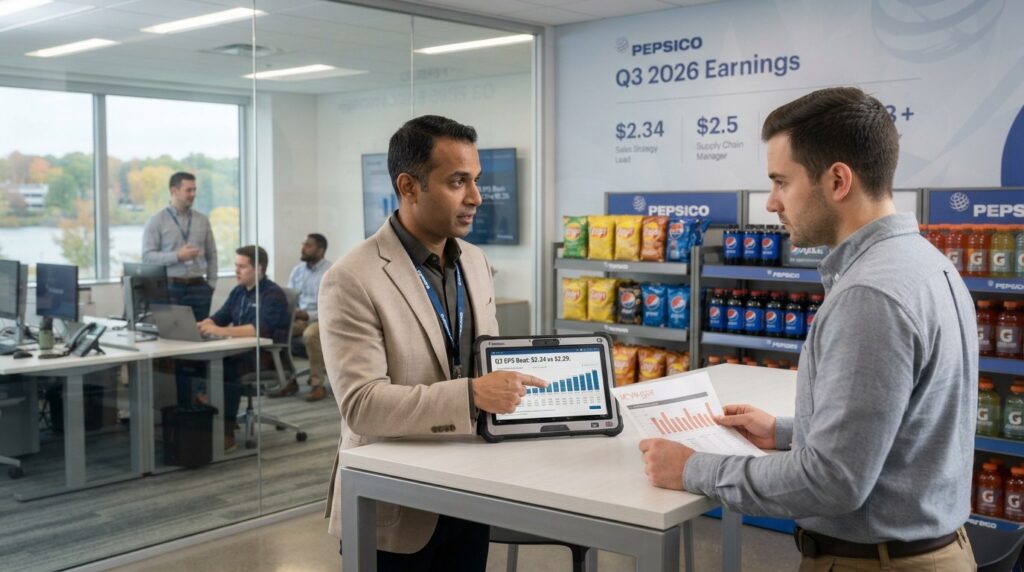
- PepsiCo's Q3 2026 earnings beat Wall Street on both lines, with adjusted EPS of $2.34 against $2.29 expected and revenue of $25.27 billion against $24.95 billion.
- Resilient snacks and beverage demand, pricing, and mix effects supported margins as the turnaround continued.
- The company trimmed its full-year core EPS outlook, adding a note of caution to the beat.
- PepsiCo — reported the Q3 2026 results on October 8, 2026
- Morningstar — reported the higher profit and sales
- SEC — filing confirms the reported figures
PepsiCo delivered a solid quarter. The PepsiCo Q3 2026 earnings beat Wall Street estimates. Adjusted EPS came in at $2.34. Analysts had expected $2.29. Revenue reached $25.27 billion. The estimate was $24.95 billion. So the company beat on both lines. The results landed on October 8, 2026.
The beat shows steady demand. Snacks and drinks held up well. Yet the outlook turned a bit cautious. PepsiCo trimmed its full-year EPS view. Investors watched that signal closely. PepsiCo owns many well-known brands. These span snacks and drinks. Strong brands help in tough times. They give pricing power to the firm. So a beat here carries real weight. It hints at steady consumer habits. The company spans global markets. Many regions add to its sales. That spread lowers single-market risk. So results stay fairly balanced. A beat then looks more durable.
The Quarter at a Glance
- PepsiCo Q3 2026 earnings beat on EPS and revenue.
- Adjusted EPS was $2.34 versus $2.29 expected.
- Revenue was $25.27 billion versus $24.95 billion expected.
- The company trimmed its full-year core EPS outlook.
- Results were reported on October 8, 2026.
PepsiCo Q3 2026 earnings beat the estimates
The headline is a clean double beat. Profit topped forecasts. Revenue did the same. That result reassured many investors. It also showed pricing power. Demand stayed firm across key brands. PepsiCo’s own filing confirms the figures. The PepsiCo Q3 2026 earnings set a confident tone. A double beat is not always easy. Costs have risen across the sector. Shoppers have watched prices closely. Yet PepsiCo still topped forecasts. That shows resilience in demand. It also reflects careful cost control.
The numbers that mattered
A beat is good news on its own. Still, context shapes the reaction. The company paired strength with caution. The points below separate the two.
Revenue and EPS versus expectations
Revenue rose to $25.27 billion. That topped the $24.95 billion estimate. Adjusted EPS hit $2.34. Analysts had modeled $2.29. Both numbers cleared the bar. The beat spanned several segments. Both food and drink contributed. Margins held up despite cost pressure. Morningstar reported the higher profit and sales.
The trimmed full-year outlook
PepsiCo also updated its guidance. It trimmed the full-year core EPS view. The move signals some caution. Costs and demand remain uncertain. So the firm stayed measured. Markets noted the softer tone. Guidance reflects real uncertainty. Input costs remain hard to predict. Currency swings add further risk. So caution makes sense here. Investors value honest signals. Still, the core business looks solid. Volumes and pricing both held. So the long trend stays positive. One soft outlook is not alarming.
| Metric | Reported | Estimate |
|---|---|---|
| Adjusted EPS | $2.34 | $2.29 |
| Revenue | $25.27B | $24.95B |
What drove the quarter
Several factors supported the beat. Core brands kept their appeal. Pricing and product mix helped margins. Snacks demand stayed resilient. The turnaround effort continued to progress. The main drivers include:
- Resilient snacks and beverage demand.
- Steady progress on the turnaround.
- Pricing and mix effects on margins.
In addition, cost control supported profit. Operations ran more efficiently. Snacks remain a core strength. Everyday treats sell in all seasons. Beverages added steady volume too. International markets supported growth. Together, these streams balanced the mix.
The turnaround backdrop
PepsiCo has worked on a reset. It aimed to sharpen its portfolio. It also focused on cost and execution. Those steps shaped the quarter. Consumer-sector deals remain active worldwide. Ultimately, the turnaround is still in motion. The Q3 beat suggests it is working.
A closer look at demand
Consumer demand drives these results. Shoppers kept buying familiar brands. They traded carefully, but kept spending. Value packs and promotions helped. So volumes held up well. Pricing added to the revenue line. Ultimately, demand looked steady, not weak. That is reassuring for the whole sector. Regional results varied a little. Some markets grew faster than others. Overall, the blend stayed healthy. Management highlighted broad resilience.
What it signals for consumer staples
Staples firms face steady pressure. Shoppers watch prices closely. Input costs can shift fast. PepsiCo’s beat offers a useful read. It hints at resilient consumer demand. Macro trade signals also stayed firm. Distributors and buyers track these trends. Many source goods through a digital B2B platform. That helps connect brands with reliable partners. Steady demand supports the whole chain. Retailers benefit from reliable demand. Shelf space goes to strong brands. Suppliers plan output with more confidence. So a beat ripples down the chain.
Is PepsiCo’s turnaround on track?
The quarter sends a mixed but positive signal. The double beat is encouraging. The trimmed outlook adds some caution. Still, demand held up well. In short, the turnaround looks on course. The next quarter will test that view. For now, PepsiCo has momentum. Long-term brand strength remains key. Innovation can lift future sales. Health trends may reshape the menu. So PepsiCo must keep adapting. Dividends also reward long holders. That appeal supports the stock. In addition, buybacks can lift per-share profit. So total returns stay attractive.
Frequently Asked Questions (FAQs)
Adjusted EPS was $2.34. Revenue was $25.27 billion. Both beat analyst estimates.
PepsiCo trimmed its full-year core EPS outlook. It did so even after the quarterly beat.
Resilient snacks and beverage demand helped. Pricing, mix, and cost control also supported profit.
PepsiCo reported on October 8, 2026. The results beat on both lines.
It points to resilient consumer demand. That is a positive read for the sector.
PepsiCo owns major snack and drink brands. These span both food and beverages.