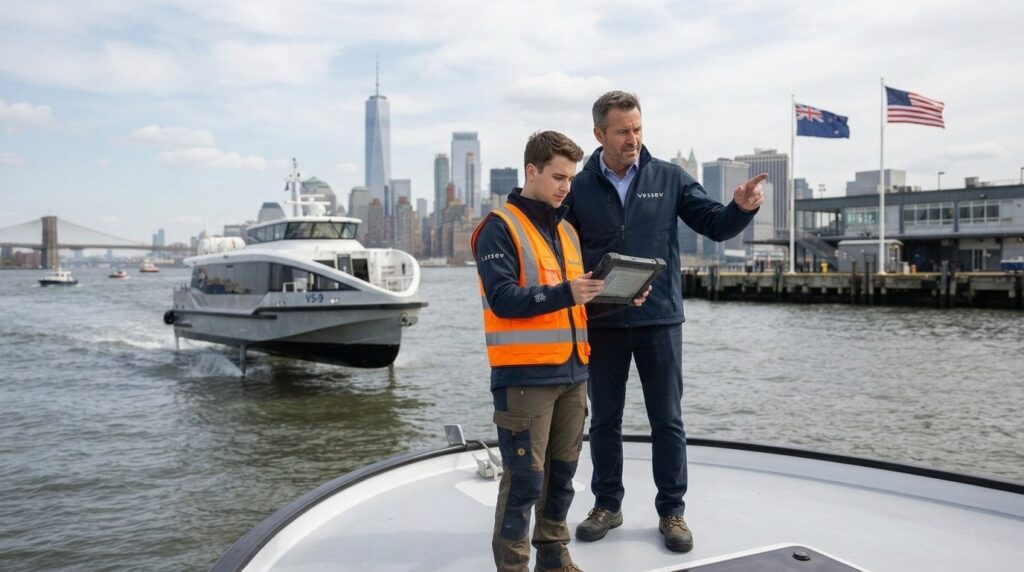
- Vessev's VS-9 electric hydrofoil ferry made its US debut on New York's East River, where underwater foils lift the hull clear of the water for a quiet, zero-emission ride.
- The New Zealand startup is backed by a $19 million Series A round, and FlyTahoe is its first US customer.
- Lower drag from foiling cuts energy use and stretches battery range, making electric ferries practical for short urban and tourism routes.
- Vessev — New Zealand maker of the VS-9 electric foiling ferry
- FlyTahoe — first US customer for the VS-9
- 1News NZ — reported the NZ$32.6 million raise for US expansion
The electric hydrofoil ferry has arrived in New York. Vessev brought its VS-9 vessel to the East River. The boat appears to “fly” just above the water. It does this using small underwater foils. The debut marks a clean maritime mobility milestone. It also signals Vessev’s push into the US market. This electric hydrofoil ferry promises quiet, zero-emission trips. For city operators, that is a notable shift.
Vessev is a maritime technology startup from New Zealand. The company builds electric foiling ferries for passengers. Its VS-9 is the flagship model. The New York showcase put the vessel in front of US buyers. It also named FlyTahoe as the first US customer.
The Launch at a Glance
- Vessev showcased the VS-9 electric hydrofoil ferry on New York’s East River.
- The company is backed by a $19 million Series A round.
- FlyTahoe is Vessev’s first US customer.
- The foiling design cuts drag and energy use sharply.
- The debut supports Vessev’s wider US expansion plans.
What the Vessev VS-9 electric hydrofoil ferry is
The VS-9 is a battery-electric passenger vessel. It carries riders on short urban routes. The hull sits on hydrofoils, which act like underwater wings. At cruising speed, these foils lift the hull clear of the water. The result is an efficient and near-silent ride. Vessev built the VS-9 for commuter and tourism services. The firm says foiling makes electric power practical at last. In other words, the design solves a real range problem. Auckland’s electric hydrofoil maker raised about NZ$32.6 million for this expansion.
How the electric hydrofoil ferry works
The idea behind the electric hydrofoil ferry is simple. It comes down to lift. Less of the hull touches water at speed. That reduces drag in a major way. Lower drag means lower energy use. For a battery-electric boat, that matters a lot. Below are the two core ideas behind the design.
Foils, lift and reduced drag
Foils work like wings beneath the boat. They generate lift as the vessel speeds up. The hull then rises above the surface. Wave impact drops, so the ride feels smooth. Passengers get a stable and comfortable journey. This foiling technology is the heart of the vessel. It also reduces wake near shorelines. Smaller wake protects docks and banks. That matters in crowded harbors.
Battery-electric propulsion and range
The VS-9 runs on batteries, not diesel. Electric motors drive the propulsion system. Because drag is low, the range stretches further. That makes battery power viable for daily routes. Battery supply deals are scaling fast across electric transport. This trend helps electric vessels reach the water sooner.
Why it matters for maritime decarbonization
Shipping is a hard sector to clean up. Diesel ferries add emissions in busy harbors. A zero-emission ferry offers a clear alternative. It removes direct emissions on short routes. It also lowers noise near crowded waterfronts. The main benefits are easy to list:
- Zero direct emissions compared with diesel ferries.
- A quieter and smoother ride for daily commuters.
- Lower energy use, which extends practical electric range.
- A strong fit for short urban and tourism routes.
Additionally, the vessel supports city net-zero goals. Cleaner water transport can ease road congestion too. Port cities now face tight air-quality rules. Electric ferries help operators meet them. They also cut long-term fuel bills. For transit agencies, the case keeps growing.
Vessev’s US expansion and the FlyTahoe deal
Vessev is not stopping at a single demo. The firm wants a real US footprint. Its $19 million Series A funds that goal. FlyTahoe signed on as the first US customer. A multi-city showcase then built further interest. The East River debut was the headline moment. New York offered a visible proving ground. Its busy waterways test real conditions. A strong showing there builds market trust. It can also attract more US operators. Vessev plans further showcases in other cities.
| Attribute | Detail |
|---|---|
| Vessel | Vessev VS-9 electric hydrofoil ferry |
| Maker | Vessev (New Zealand) |
| Funding | $19 million Series A |
| First US customer | FlyTahoe |
| US debut | New York’s East River |
From concept to a New York debut
Electric foiling is not a brand-new idea. Yet reliable passenger vessels took real time. Vessev refined the VS-9 over several years. Fresh funding then unlocked the US showcase. Ultimately, the technology finally met the market. That is why the New York debut drew attention.
Ripples across clean transport procurement
Fleet buyers are watching this space closely. Cities want cleaner public transport options. Operators want lower fuel and maintenance costs. An electric passenger ferry can serve both goals. In addition, it fits strict emission targets. Buyers still need verified vessel and parts suppliers. They can compare options on a global B2B marketplace. That approach connects operators with trusted sellers. It also speeds up cross-border procurement. Clear sourcing lowers project risk too. Insurers and ports will shape adoption as well. Clean safety records build buyer confidence. Standard parts will ease future maintenance. Over time, a wider supplier network should form. Clean transport investment is rising on land as well.
What’s next for electric ferries
Expect more pilots across US cities soon. Tourism routes may adopt the vessels first. Commuter lines could follow as trust grows. Scale will depend on charging and costs. Clean-tech innovation keeps pushing the sector ahead. Student engineers recently built a solar-powered mobile clinic, a sign of similar momentum. The next wave of electric water transport looks close.
Can electric hydrofoil ferries scale beyond demos?
The New York debut was a strong start. Still, scale remains the real test. Vessev must prove reliability at volume. It must also keep costs competitive. In short, the VS-9 shows clear promise. The next year will reveal its staying power. For now, the electric hydrofoil ferry has momentum. Operators will watch the early pilots closely. Reliable service will drive fresh orders. Costs should also fall with scale.
Frequently Asked Questions (FAQs)
It is a battery-powered passenger boat. Underwater foils lift the hull at speed. This cuts drag and removes direct emissions.
Vessev makes the VS-9. The company is based in New Zealand. It builds electric foiling ferries.
Foils reduce drag by lifting the hull. Less drag means lower energy use. That extends the electric range.
FlyTahoe is the first US customer. The deal came with Vessev’s US expansion.
The VS-9 debuted on New York’s East River. It was part of a multi-city US showcase.