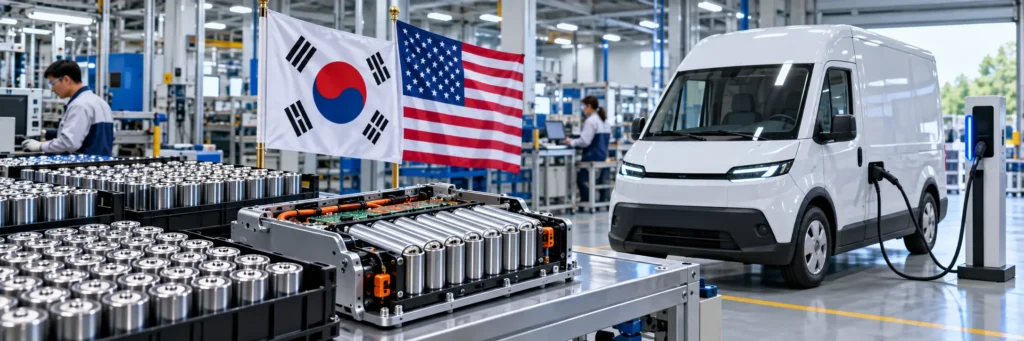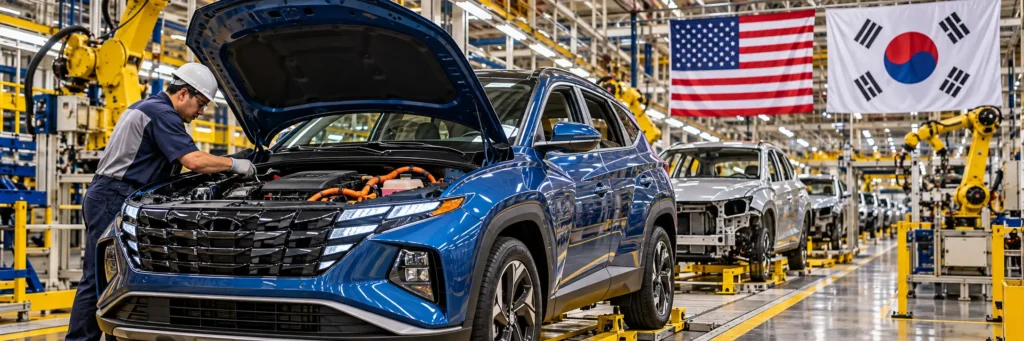
Hyundai is stepping up production of hybrid vehicles in the U.S. The carmaker will put $500 million into its plant in Alabama. The first model that has benefited is the Tucson Hybrid. It is being imported from Hyundai’s Ulsan, South Korea, plant.
A plan was outlined by CEO José Muñoz in Detroit on October 1. He was a presenter at the Automotive News Congress! The Hyundai Alabama hybrid investment is the result of two forces. US buyers are demanding more hybrids; tariffs would increase the cost of imports. That is, local production is now a good business idea.
Statistical Data
- Hyundai will invest $500 million in its Montgomery, Alabama plant.
- The Tucson Hybrid will move from Ulsan to Alabama production.
- A Santa Fe EREV follows in the first half of 2027.
- A pickup truck is planned by 2030.
- A 15% US tariff on Korean cars makes local output more attractive.
What is Hyundai’s Announcement?
The investment targets the Hyundai Motor Manufacturing Alabama plant in Montgomery. It expands the site’s role in electrified vehicles. The key points are below.
- Investment: $500 million in the Alabama plant.
- First model: Tucson Hybrid, now shipped from Ulsan.
- Next step: Santa Fe extended-range EV (EREV) in the first half of 2027.
- Longer term: A pickup truck planned by 2030.
- Announced by: CEO José Muñoz, October 1, 2026.
The Alabama plant is no stranger to hybrids. It already builds the Santa Fe Hybrid. Therefore, this plan adds the brand’s best-selling SUV to the local lineup.
Why the shift towards Hybrids and why now?
Hybrid demand is rising fast in the US market. At the same time, trade policy has raised import costs. Both trends favour building closer to buyers.
Rising US Hybrid Demand
Hyundai’s US hybrid sales rose 33% in August. Hybrids now make up more than 31% of Tucson sales. That share was about 12% in 2021. Consequently, the Tucson Hybrid has become a core volume model.
Hyundai and Kia also gained ground overall. Their combined share reached 12.1% in July and August. That moved the group past Ford into third place in the US market.
The Tariff Factor
Korean-built cars now face a 15% US import tariff. That cost hits every imported Tucson Hybrid. Building locally removes the tariff on those vehicles.
Additionally, local output shortens supply chains. It reduces shipping times and currency risk. In other words, the plant upgrade protects margins and delivery speed.
How does this fit Hyundai’s US Strategy?
Hyundai has been deepening its US footprint for years. Alabama is central to that plan. The group also runs its Metaplant America EV factory in Georgia. The new investment adds flexibility between hybrid and electric models.
The company is also securing upstream supply. Its steel partnership with POSCO aims to localise key materials. Together, these moves build a more self-contained US auto supply chain.
Market Prospect for B2B Buyers
Local hybrid production will have a trickle-down effect throughout the supplier network in Alabama. Parts manufacturers, logistics companies, and equipment suppliers will benefit. As the line increases, maybe more orders will come in.
Suppliers need to find the right partners. A B2B marketplace enables automotive parts suppliers to connect with buyers from all over the world and source parts from all over. These types of platforms link tier-two and tier-three vendors to the OEM supply chains. The reach is important when production moves to another country.
This story fits a wider reshoring trend. B2BInside covered the $5.8 billion Hyundai and POSCO steel plant in Louisiana. Tariffs are reshaping North American trade too. Our report on new tariffs after the US-Canada trade talks explains that shift.
Will Local Hybrids Pay Off?
The case for local hybrids looks strong today. Demand is rising, and tariffs reward US production. However, policy and fuel prices can change quickly.
Ultimately, Hyundai is hedging across hybrids, EREVs, and EVs. That flexibility protects it against shifting demand. For now, the Hyundai Alabama hybrid investment strengthens its US position.
Frequently Asked Questions (FAQs)
Hyundai will build it at its Montgomery, Alabama plant. It is currently imported from Ulsan, South Korea. The $500 million investment supports the move.
Hyundai is investing $500 million in the plant. The money supports local hybrid production. It also prepares for future models.
US hybrid demand is rising quickly. Korean imports also face a 15% tariff. Local production avoids that cost.
Yes, it already builds the Santa Fe Hybrid. The Tucson Hybrid will be added next. A Santa Fe EREV follows in 2027.
Korean-built cars face a 15% US import tariff. That raises costs on imported models. Carmakers are shifting more production to US plants.
A Santa Fe extended-range EV is due in the first half of 2027. A pickup truck is planned by 2030. The plant already builds the Santa Fe Hybrid.