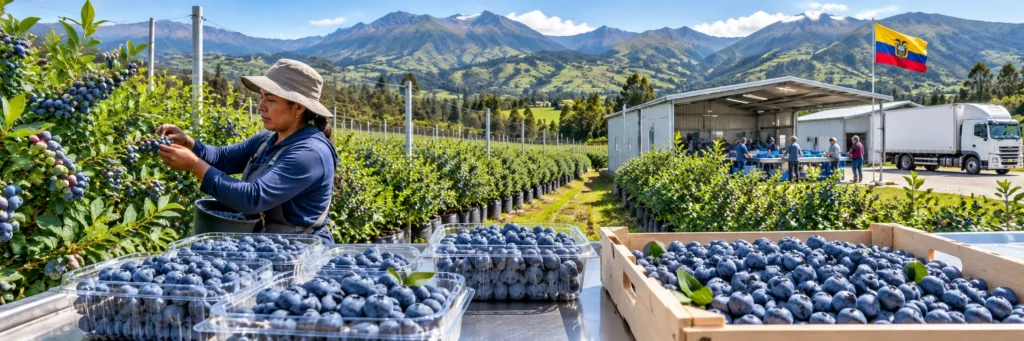
Ecuador is emerging as a new force in blueberries. The country wants a bigger share of the premium market. It is aiming for a major jump in export volume. Ecuador’s blueberry exports could rise sharply in the coming years. In other words, a small player has big ambitions.
The country reports a target of up to 400% export growth. That figure reflects an ambition, not a current result. Verified data shows fast recent growth already. Additionally, Ecuador’s climate gives it a rare advantage.
Rise of Ecuador’s Blueberry Sector
Ecuador’s blueberry sector is young but growing fast. Recent figures show a strong upward trend. The country is building from a small but rising base. The key numbers below show its progress.
- 2024 exports: About 300 tonnes
- 2023 exports: About 112 tonnes
- Recent growth: Nearly 168% year over year
- Export value: Over $1 million in 2024
- Cultivated area: 300 hectares, targeting 1,000
The 400% figure is a forward-looking target. It reflects Ecuador’s push into premium markets. The verified growth so far stands at 168%. That rise came between 2023 and 2024. Consequently, the sector shows real early momentum.
Why Ecuador Targets the Premium Market?
Ecuador is not chasing volume alone. It wants to sell high-quality, high-value blueberries. Premium buyers pay more for firm, flavourful fruit. The sections below explain this strategy.
A Focus on Quality
Ecuador stakes its future on fruit quality. Growers highlight firmness and strong flavour profiles. These traits suit the most demanding global buyers. In other words, quality is Ecuador’s main selling point.
One industry voice captured the ambition clearly. Sebastián Muñoz of Negoser praised the fruit’s quality. He said it lets Ecuador compete in demanding markets. Average FOB prices range from $5 to $6 per kilogram. Additionally, premium positioning supports those strong prices.
A Year-Round Advantage
Ecuador holds a rare natural edge. Its climate allows year-round blueberry production. Andean and coastal regions offer varied growing conditions. That means fruit can ship in every season. Therefore, Ecuador can fill gaps other suppliers leave.
This constant supply appeals strongly to buyers. Retailers value partners who deliver all year. Ecuador grows several premium varieties too. These include Biloxi, Emerald, and Eureka. Consequently, the country can match diverse buyer needs.
Why Ecuador Matters to Global Fruit B2B Buyers?
Ecuador’s rise adds a fresh premium supplier. Importers gain a new year-round sourcing option. That flexibility strengthens fruit supply chains. Additionally, competition can improve quality and pricing.
For B2B buyers, finding new suppliers takes effort. Importers must verify quality and reliability carefully. A global B2B marketplace helps firms connect worldwide. Such platforms link fruit buyers with trusted exporters. That reach matters as Ecuador scales up.
This story fits a wider export-growth pattern. B2BInside has covered how nations expand food exports. Our report on Pakistan’s 41% seafood export boom shows the trend. Global food markets keep shifting fast too. Our coverage of the global wheat price rally reflects that.
Can Ecuador Hit its Target?
The 400% goal is bold but not guaranteed. It depends on new acreage and market access. Ecuador is expanding hectares toward 1,000. Phytosanitary deals now cover over 30 countries.
Ultimately, Ecuador has real momentum behind it. Year-round supply and quality give it strong footing. Yet scaling to premium volumes takes time. Talks with China could open a huge market. For now, Ecuador blueberry exports show clear promise.
Frequently Asked Questions (FAQs)
Exports rose nearly 168% between 2023 and 2024. They reached about 300 tonnes in 2024. Ecuador now targets up to 400% growth.
Premium buyers pay more for high-quality fruit. Ecuador highlights firmness and strong flavour. FOB prices range from $5 to $6 per kilogram.
Ecuador cultivates about 300 hectares of blueberries. It aims to reach 1,000 hectares over time. That growth supports its export targets.
Its climate offers varied growing conditions. Andean and coastal regions differ greatly. That allows harvests in every season.
The United States and Europe are key markets. Pilot shipments have reached Asia successfully. Ecuador is also negotiating access with China.